
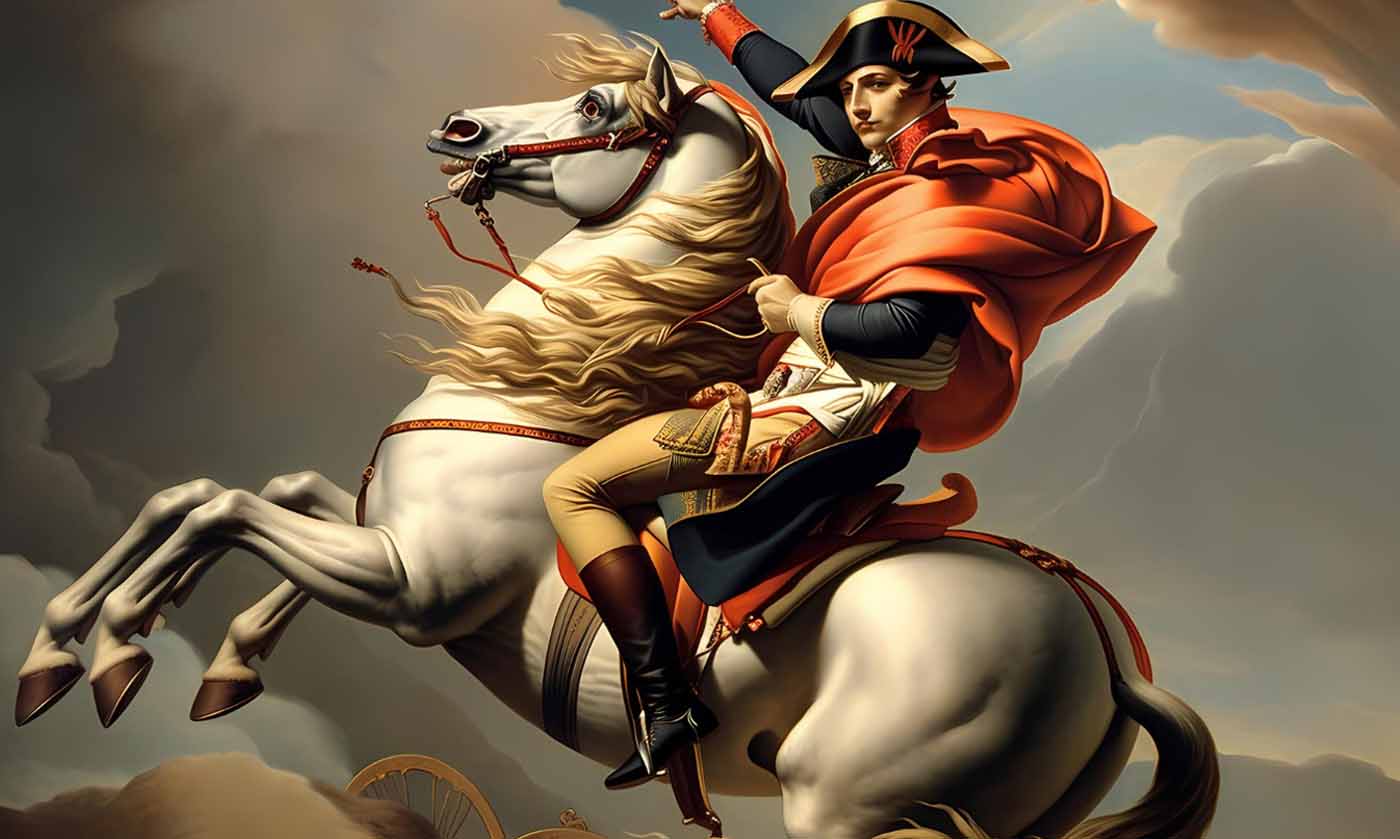
What do we know about Napoleon?
With the recent premiere of 'Napoleon', director Ridley Scott portrays the small, megalomaniacal emperor in a historical and realistic setting. But what do we actually know about Napoleon? The emperor known for his military conquests and political reforms is much less known for his reforms in many other areas. We highlight two of them here.
Napoleon the meal prepper avant la lettre.
Napoleon had an extraordinary interest in power supply. He realized better than anyone that a soldier does not function well on an empty stomach.
Another striking aspect of Napoleon's influence on French cuisine was his desire to democratize food. Under his reign, state banquets became more accessible, with the emperor preferring simple, flavorful dishes over lavish, extravagant meals. This had a domino effect on broader society, where simple and tasty dishes became the norm, rather than the exclusive excesses previously reserved for the elite.
Another characteristic of Napoleonic influence on French cuisine was his focus on logistics and efficiency. During his military campaigns, Napoleon quickly realized the importance of well-fed troops. He encouraged innovations in food preparation and transport, which led to the development of preserved foods such as canned goods. These technological advancements found their way into households and changed the way people stored and consumed food.
Napoleon's influence on French cuisine also went hand in hand with his interest in agricultural reforms. He encouraged the development of farmland, promoted crop cultivation, and stimulated the development of local food production. This resulted not only in an abundance of fresh ingredients, but also enriched the regional diversity of French cuisine.
Napoleon is therefore a shining example when it comes to healthy nutrition and a varied diet.


Napoleon and intellectual property
When it comes to food, there has been a lot of commotion lately regarding the Crompouce. The product and the brand name Crompouce may not be used without permission from the official developer. And action is most certainly being taken against infringement of this right.
Related to this is the patent. In the early 19th century, during the reign of Napoleon, the idea of patents was revived and systematically structured. The patent, a legal document granting the inventor the exclusive right to produce and sell his invention, became an instrument of progress and a stimulus for creativity. Under Napoleon, the French patent system was established in 1791, which later served as a model for many other countries around the world.
The Napoleonic patent system (or patent system) not only influenced France but also spread across Europe and beyond. Countries such as the Netherlands, Belgium, and parts of Germany adopted similar systems, thereby anchoring the concept of intellectual property in modern society.
The EPO (European Patent Office) in Rijswijk is the Dutch branch of the European Patent Office, an organization responsible for granting European patents. The EPO has headquarters in Munich, Germany, and The Hague, the Netherlands.
The office in Rijswijk, also known as the The Hague headquarters, is located near The Hague and houses a large number of employees involved in the patent granting process. The European Patent Office plays a crucial role in facilitating the application and granting of patents for inventions in Europe.
Companies and inventors can file an application for a European patent at the EPO, which means that the protection of their invention applies to multiple European countries. The EPO conducts a thorough examination of every patent application and, if the criteria are met, the patent is granted.
The European Patent Office in Rijswijk contributes to promoting innovation and protecting intellectual property in Europe. It is an important institution for companies and inventors seeking protection for their technological and scientific discoveries at a European level.
By the way, EPO is a neighbor of our Personal Gym!


 English
  Dutch
Dutch