
Weight loss is one of the most popular goals, but it can be a challenge to reach the desired weight and then maintain it.
Often, the emphasis lies solely on the result, the performance goal, but it has proven useful to add learning and behavioral goals for a sustainable outcome. After all, it is difficult to achieve lasting changes if you do not keep your finger on the pulse during the process. You want to be able to monitor, adjust, and evaluate where necessary. This way, you have more control over the outcome and, perhaps even more importantly, you can learn from it so that you grow as a person—not literally, of course 😉
In this blog, we will look at the differences between these goals and how they can influence weight loss.
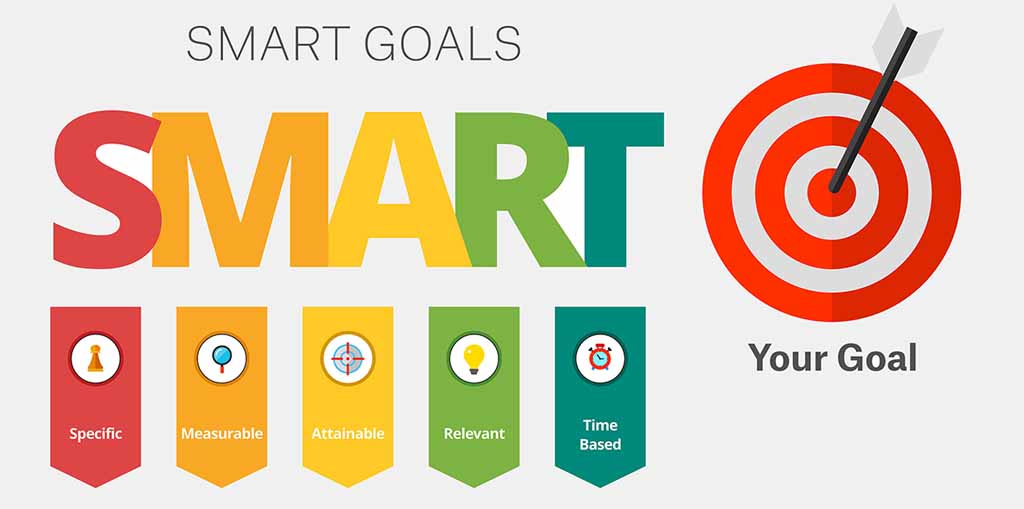
Setting goals is SMART
Learning goals, behavioral goals, and performance goals differ from one another, but can be made concrete in the same way, namely through the SMART method or a derivative thereof. Technically, the SMART method moves you from a goal to an objective. A goal is a general direction or a desired outcome that you want to achieve. It indicates what you want to achieve, but it is often not specific, measurable, or time-bound. For example;
- I would like to fall off
In contrast, an objective is Specific, Measurable, Acceptable, Realistic, and Time-bound. For example;
- I want to lose 5 kilos in three months by eating vegetables and non-processed food daily.
In short, a goal is a general direction or desired outcome, whereas an objective is concrete and provides direction regarding which actions must be taken.
Goals Goals Goals and more Goals
We just mentioned that the goals differ, but what exactly are those differences? In short, learning goals focus on learning and improving skills and knowledge, while behavioral goals focus on changing behavior and habits, and performance goals focus on achieving a specific result or performance. Below, we provide a more detailed explanation with examples.
Learning objectives
Learning objectives are focused on the process of change and not on the outcome. They are aimed at acquiring knowledge and experience, improving skills, and developing new habits. Examples of learning objectives for weight loss could be:;
- learn how to prepare a voluminous low-calorie meal
- which emotions a particular food evokes in you
Behavioral goals
Behavioral goals are aimed at changing habits and behavior to achieve a goal. Examples of behavioral goals for weight loss could be:;
- to eat 250 grams of vegetables twice daily
- to drink a glass of water daily with every meal (instead of high-calorie drinks)
Performance goals
Performance goals are focused on the outcome and achieving a specific objective. These goals are easily measurable and are often expressed in hard criteria, such as the number of kilograms to lose, body weight, and clothing size. An example of a performance goal for weight loss could be:;
- to lose 10 kilos in three months
The combination of goals and weight loss
As you have read, the three types of goals contribute to weight loss. Performance goals can help you maintain focus and motivation. On the other hand, behavioral and learning goals help you achieve lasting change in your life and understand why you make certain choices and how you can make better choices.
However, it is important to set realistic (SMART) goals that align with your personal needs, preferences, competence, and lifestyle. Setting overly ambitious goals can lead to frustration and demotivation if they are not achieved; therefore, build in some margin, take your capacity into account, and be kind to yourself!
Furthermore, patience is a virtue, and remember that you are not a robot, but human. Facing obstacles is part of every change process, and fortunately so, otherwise you would never learn from it.
Conclusion
Weight loss and, especially, weight maintenance can be challenging. Setting and combining learning goals, behavioral goals, and performance goals can form a powerful foundation to support the process and be successful in the short and long term.
And remember, be kind to yourself!


 English
  Dutch
Dutch