
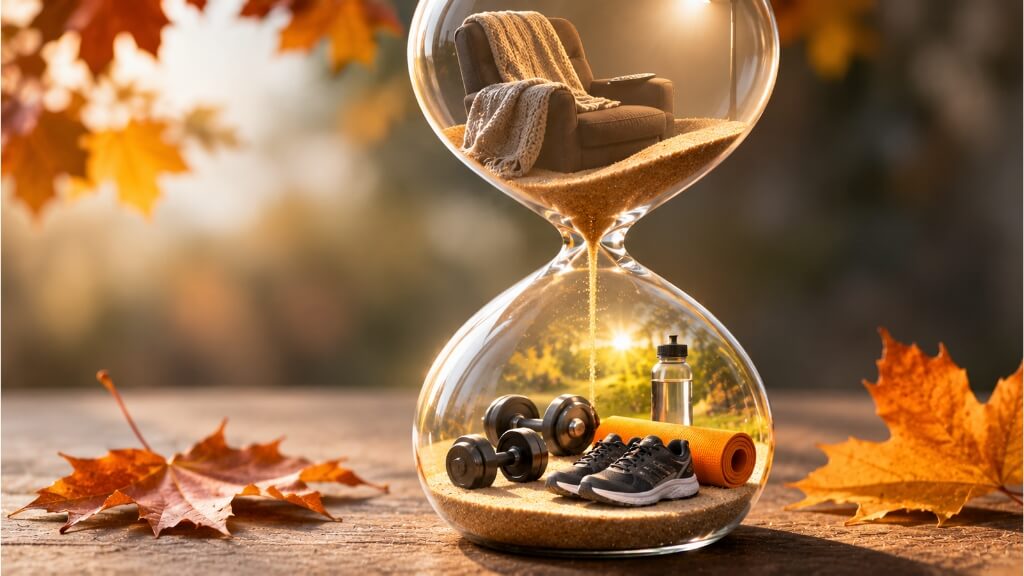
Stopping moving makes you older than you think
More energy, a stronger body, a better mood, and more self-confidence. It sounds almost too good to be true, but one habit influences all these areas: move.
Yet, for many people, exercise is the first thing to fall by the wayside as soon as things get busy. Work, family, fatigue, stress, or simply not feeling like it. Before you know it, you’ve put it off for another day. But your body doesn’t wait. Your fitness, muscle strength, mobility, and energy respond to what you do every day. Or, conversely, what you don’t do.
There is a well-known saying:
“You don't stop moving because you get older. You get older because you stop moving.”
And there is a lot of truth in that. Exercise is not a luxury. It is not an extra for people with a lot of time. It is a basic need for your health, your mood, your weight, your self-confidence, and your future.
Movement is more than sports
Many people immediately think of heavy training, running, fitness, or sweating for hours in the gym when it comes to exercise. But exercise is much broader than that.
Walking, cycling, climbing stairs, gardening, stretching, strength training, swimming, dancing, or simply getting up more often during your workday: it all counts.
The most important thing is not that you train perfectly. The most important thing is that you move regularly. Consistency trumps intensity.
What exercise does for your body
Regular exercise helps your body become stronger, fitter, and more resilient. It supports your muscles, bones, heart, lungs, and metabolism.
An active body continues to function better. You build muscle strength, improve your fitness, and support your bone density. This is not only important when you are young, but especially as you get older.
In addition, physical activity helps reduce risks associated with being overweight, high blood pressure, type 2 diabetes, cardiovascular disease, and other lifestyle-related health problems.
And you might notice it even sooner in your daily energy. Those who exercise regularly often feel more energetic in the long run. Of course, a workout costs energy, but it also benefits your body: improved blood circulation, stronger muscles, better oxygen uptake, and greater endurance.
You get less tired from ordinary daily things.
Exercise also affects your self-image.
As your body gets stronger, how you view yourself often changes as well. You feel more powerful. Your attitude changes. You notice that you can persevere with things that were difficult before.
That does something to your self-confidence.
Not only because your body changes, but especially because you experience that you can keep promises to yourself. Every walk, every workout, and every conscious choice is proof to yourself: I am someone who takes care of my health.
That feeling carries over into other areas of your life.
The influence on your head and emotions
Exercise is not only good for your body, but also for your brain. During exercise, substances are released that contribute to a better mood, less stress, and more relaxation.
Many people notice that they can think more clearly after a walk. That they become calmer. That tension literally disappears from their bodies.
Regular exercise can help with:
- more mental peace
- better sleep
- less stress
- more focus
- a better mood
- more resilience
- more productivity
Especially on days when your head is full, movement can be the key. Not because all problems disappear, but because your body and brain get space again.
Movement and sleep
An active body often sleeps better. Exercise helps reduce stress, release tension, and support your natural day-night rhythm.
Exercising outdoors, in particular, has additional benefits. Daylight helps regulate your biological clock. As a result, a walk in the morning or afternoon can contribute to more energy during the day and better sleep in the evening.
Be careful with intense exercise right before bedtime. For some people, this has an activating effect. Gentle exercise, such as walking or stretching, is often more suitable for the evening.
You don't have to start at the extreme.
A big mistake many people make is starting too fanatically. They want to train five times a week immediately, eat completely differently, and overhaul their entire lifestyle.
That usually only works for a short time.
A sustainable lifestyle starts small. Not with everything at once, but with an achievable first step. Consider:
- ten-minute walk after dinner
- strength training twice a week
- stand up for a moment every hour
- take the stairs
- park the car a little further away
Small choices may seem unimportant, but repeated behavior changes your body.
It is not the perfect training that makes the difference. The habit makes the difference.
Which forms of exercise are important?
Variety is ideal for a healthy and strong body.
- Strength training helps keep your muscles and bones strong.
- Walking, cycling or swimming supports your fitness and heart health.
- Mobility exercises help you stay flexible.
- Gentle movement helps you relax and recover.
You don't have to do everything at once. Choose something that suits you and build from there.
The best form of exercise is the form that you keep doing.
Start today, not Monday
Waiting for motivation rarely works. Motivation often only comes after you have started. That is why it is important to make the barrier as low as possible.
Put on your shoes. Walk for ten minutes. Do five squats. Get up from your chair. Put on some music and move. Start small, but do start.
Your body doesn't need a perfect plan. It needs movement.
Every step counts.
Assignment: Plan twenty minutes of exercise today
Schedule twenty minutes of exercise in your calendar today. Not tomorrow. Not Monday. Today.
Choose something simple:
- take a walk
- do a short workout
- bike a lap
- do stretching exercises
- consciously take the stairs more often
Then write down how you feel. Do you have more energy? Is your mind calmer? Do you feel stronger or more satisfied?
Repeat this for the next seven days.
Do you want more energy, get stronger, and feel better in your own skin, but find it difficult to stick with exercising?
Schedule a no-obligation intake at RWIJK GYM and discover how we can help you get moving and stay active!


 English
 Dutch